Earlier fault detection
Identify thermal and vibration changes before they become critical.
Railway bogie monitoring
Bogie monitoring continuously reads temperature and vibration from railway bogies, processes data on-site, and feeds a local AI running inside your own infrastructure.
Why it matters
Bearing overheating and abnormal vibration are early signs of mechanical wear. Without continuous monitoring, these anomalies often go unnoticed until they cause unplanned stoppages, safety incidents, or costly maintenance disruption.
Early monitoring helps maintenance teams identify abnormal behavior sooner, reduce unexpected downtime and plan interventions more efficiently.
Identify thermal and vibration changes before they become critical.
Support planned interventions instead of reactive stoppages.
Analyze operational data without sending raw signals to the cloud.
Monitoring points
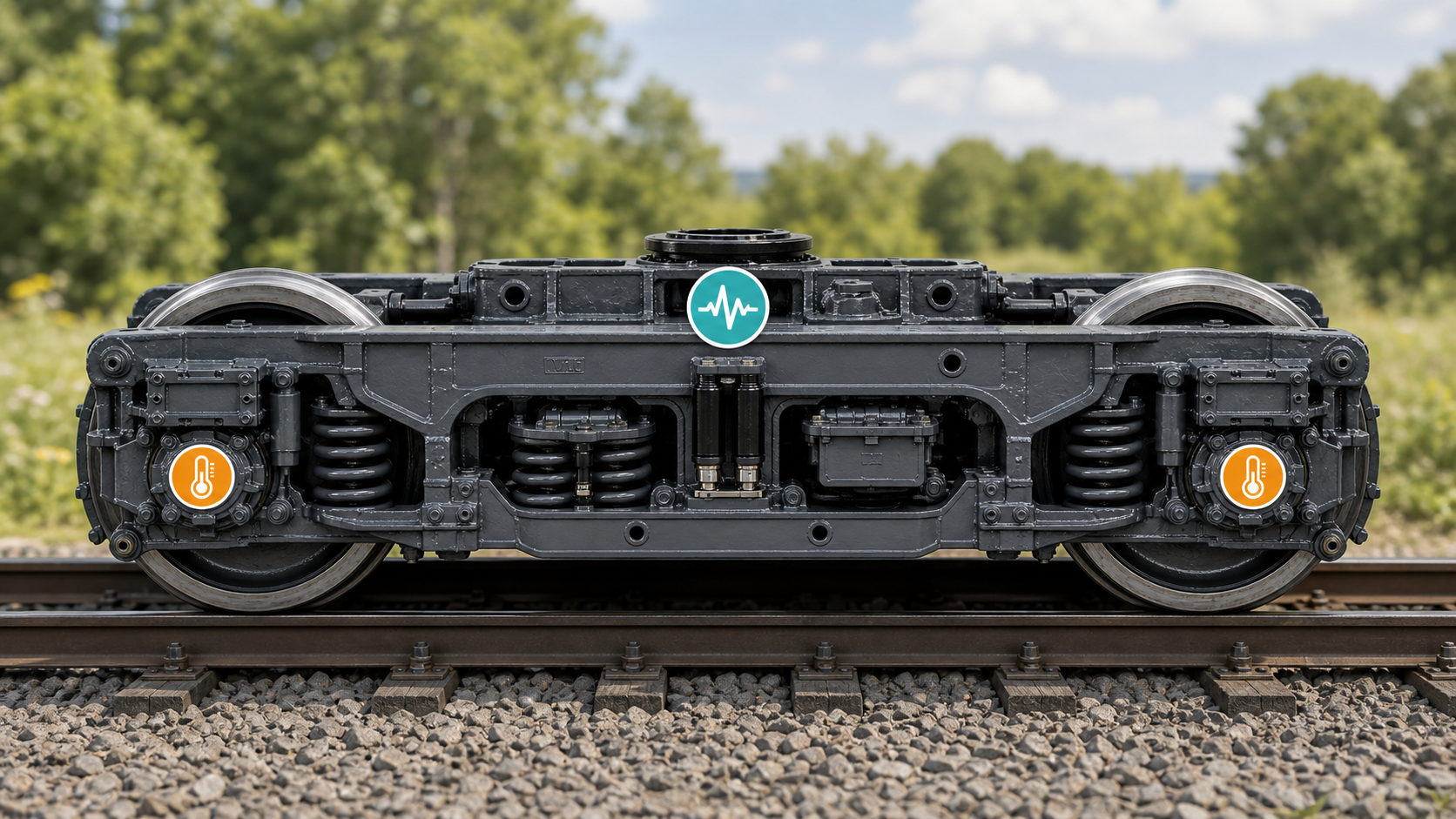
Temperature is tracked close to axle-box and bearing areas, where overheating can indicate lubrication issues, wear or early-stage faults.
Vibration is monitored on the bogie frame to detect changes in mechanical behavior, imbalance or component deterioration.
Bogie monitoring validates signal quality and node status before data is forwarded to the local analytics infrastructure.
Feature to benefit
Monitor critical bogie components continuously.
Reduce noise and avoid unnecessary data traffic.
Protect operational railway data between vehicle and server.
Detect anomalies and support maintenance decisions.
How it works
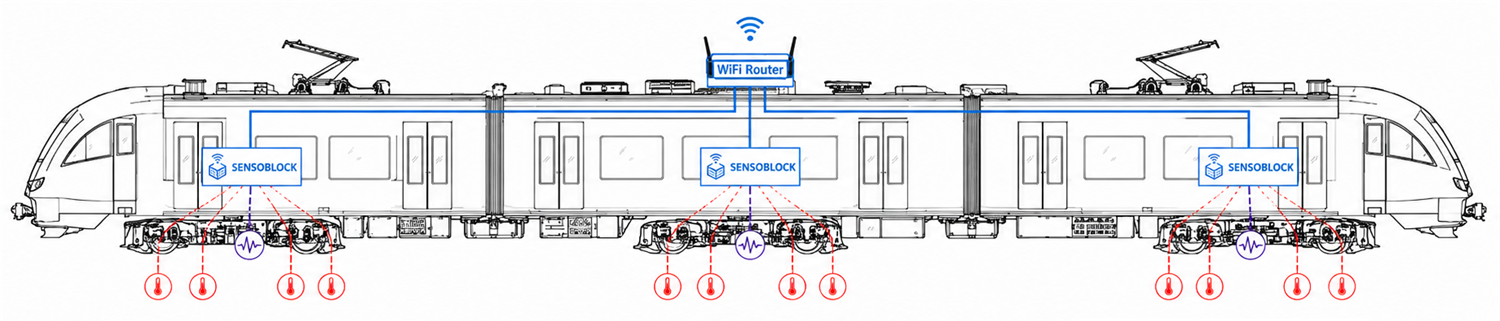
Temperature and vibration are collected from critical bogie points.
Bogie monitoring validates and filters data directly on the vehicle.
Only relevant information reaches the local infrastructure.
Local AI identifies patterns, trends and abnormal behavior.
Local intelligence
Data never leaves the operator's infrastructure. AI models interpret processed signals and provide actionable insights for maintenance teams.
Typical applications
Featured by Club Feroviar
Our approach to continuous railway bogie monitoring was featured in Club Feroviar, highlighting how temperature and vibration data can help maintenance teams spot anomalies earlier and plan interventions with greater confidence.
“Monitorizare boghiuri în timp real, pentru o mentenanță inteligentă”
Read the Club Feroviar articleInterview in Construct Intelligence
Construct Intelligence spoke with Alex Negoiță-Tiu about Benoli Tech’s move toward its own rail products, and how the SensoBlock system uses on-board temperature and vibration data to support condition-based maintenance.
“Alex Negoiță-Tiu on Benoli Tech’s Bet on Predictive Maintenance for Trains”
Read the Construct Intelligence interviewWhy local processing
Raw data transfer
External hosting
Higher bandwidth
Potential data sovereignty concerns
Local filtering
Customer infrastructure
Reduced traffic
Local control of operational data
Explore a pilot deployment
We can walk through the architecture, review bogie measurement points, and define how Bogie monitoring connects to your local maintenance analytics environment.